Description
Premium Industrial Grade Pseudoephedrine HCl – Your Trusted Bulk Chemical Supplier
Thank you for reading this post, don't forget to subscribe!
Pseudoephedrine Hydrochloride represents a naturally occurring alkaloid and widely used decongestant that serves as a critical pharmaceutical compound and chemical precursor in organic synthesis. As the (1S,2S)-diastereomer of ephedrine, pseudoephedrine exhibits distinct pharmacological properties including reduced central nervous system penetration and enhanced selectivity for nasal decongestion. Biosynlab delivers pharmaceutical-grade pseudoephedrine HCl with certified ≥99.5% purity and high enantiomeric purity, supporting pharmaceutical research, formulation development, and licensed chemical synthesis across USA (DEA List I chemical licensed institutions), United Kingdom, European Union, and international markets.
The stereochemistry of pseudoephedrine is critical for its pharmacological profile, with the (1S,2S)-configuration providing effective nasal decongestion with minimal cardiovascular stimulation compared to ephedrine. This structural configuration, featuring a beta-hydroxy group on the phenethylamine backbone with the opposite stereochemistry to ephedrine, creates distinct pharmacokinetic properties including reduced blood-brain barrier penetration. Pharmaceutical manufacturers and research institutions in London, Berlin, Amsterdam, New York, and Basel rely on Biosynlab pseudoephedrine for decongestant formulation development, chiral synthesis research, and as a precursor for licensed pharmaceutical manufacturing.
Chemical Properties & Structural Characterization
Pseudoephedrine Hydrochloride belongs to the substituted phenethylamine chemical class, specifically the beta-hydroxyphenethylamine subclass. It is the (1S,2S)-diastereomer of ephedrine (1R,2S).
Key Structural Features:
- Core Scaffold: Beta-hydroxyphenethylamine backbone
- Substitutions: N-methyl, beta-hydroxy, alpha-methyl
- Stereochemistry: (1S,2S)-configuration (pseudoephedrine; ephedrine is 1R,2S)
- Diastereomer: Ephedrine and pseudoephedrine are diastereomers (not enantiomers)
- Salt Form: Hydrochloride (most common), sulfate, free base
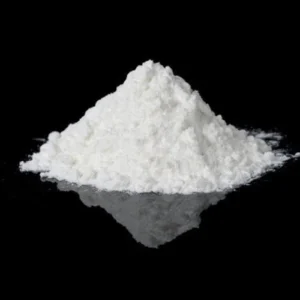
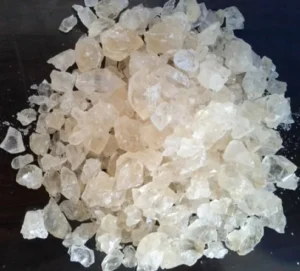
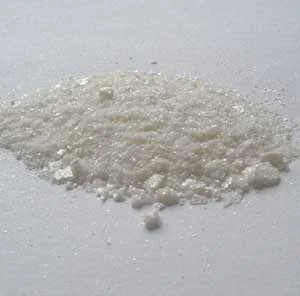
- Physical State: Crystalline powder (HCl salt) or prismatic crystals
Analytical Characteristics:
- UV Absorption: 251 nm, 257 nm, 263 nm (fine structure, phenyl ring)
- Retention Time (HPLC): 5.5-6.2 minutes (C18 column, chiral separation)
- Chiral HPLC: Baseline separation from ephedrine and enantiomers
- Mass Spec m/z: 166.1 [M+H]+ (free base), 148.1 [M+H-H₂O]+, 133.1 [M+H-CH₃NH₂]+
- NMR Signatures: N-methyl doublet (2.4-2.6 ppm), methine proton (3.8-4.2 ppm), benzylic proton (4.6-5.0 ppm), phenyl protons (7.2-7.4 ppm), distinct from ephedrine
Research Applications & Scientific Utility
Pharmaceutical Research & Development:
Pseudoephedrine serves as a critical compound for:
- Nasal decongestant formulation development (Sudafed®)
- Extended-release formulation technology
- Combination therapy research (with antihistamines)
- Chiral synthesis and resolution methodology
- Prodrug and salt form optimization
- Bioavailability and pharmacokinetic studies
- Comparison with phenylephrine and other decongestants
Chemical Synthesis & Precursor Applications:
- Chiral auxiliary in asymmetric synthesis
- Precursor for licensed pharmaceutical manufacturing
- Building block for complex molecule synthesis
- Resolution agent for racemic mixtures
- Comparison with ephedrine in synthetic applications
Forensic & Regulatory Research:
- Precursor chemical monitoring (methamphetamine synthesis)
- Regulatory compliance studies
- Import/export control research
- Diversion monitoring programs
- Analytical method development for detection
Comparative Pharmacology:
- Ephedrine vs. pseudoephedrine pharmacology
- Cardiovascular effects comparison
- CNS penetration studies
- Nasal decongestion efficacy research
- Drug interaction studies
Synthesis & Quality Control Protocols
Biosynlab’s pseudoephedrine production adheres to rigorous pharmaceutical-grade standards:
Synthetic Route:
- Starting Material: Fermentation from Ephedra or chiral synthesis
- Resolution: Separation from ephedrine diastereomer mixture
- Purification: Recrystallization and chromatography
- Salt Formation: HCl salt preparation
- Drying: Vacuum desiccation
Analytical Verification:
- Chiral HPLC: Enantiomeric excess >99% (1S,2S-pseudoephedrine)
- HPLC-PDA: Purity ≥99.5%, impurity profiling (ephedrine, related alkaloids) <0.5%
- ¹H NMR (400 MHz): Complete structural assignment, stereochemistry confirmation
- ¹³C NMR (100 MHz): Carbon environment verification
- Polarimetry: Specific rotation [α]D = +48.0° to +52.0° (c=1, H₂O)
- LC-MS/MS: Molecular weight confirmation
- FTIR-ATR: O-H stretch, N-H stretch, aromatic confirmation
- DSC: Melting point determination
- Residual Solvent: GC-HS per ICH Q3C guidelines
- Heavy Metals: ICP-MS for Class 1 and 2 elements
Batch Documentation:
- Certificate of Analysis (COA)
- Material Safety Data Sheet (MSDS)
- DEA List I documentation (USA)
- Stability testing data
- Chain of custody documentation
Packaging, Storage & Logistics
Primary Containment:
- Amber Type I borosilicate glass bottles (25g-1kg)
- PTFE-lined caps with tamper-evident seals
- Multiple indicating silica gel desiccant packets
Storage Specifications:
- Recommended: Room temperature (15-25°C), desiccated
- Stability: 36+ months at room temperature with proper handling
- Light Protection: Amber containers recommended
Handling Protocols:
- DEA List I facility required (USA)
- Comprehensive inventory tracking
- Fume hood recommended for bulk handling
- Personal protective equipment required