Description
Premium Industrial Grade 1cP-LSD Micro Pellets – 10mcg
Thank you for reading this post, don't forget to subscribe!
1cP-LSD Micro Pellets – 10mcg (1-cyclopropionyl-lysergic acid diethylamide) represent a novel lysergamide research chemical and prodrug of LSD that has emerged as a valuable tool in neuropharmacological research and psychedelic science. As a structural analog of LSD featuring a cyclopropionyl group attached to the indole nitrogen, 1cP-LSD offers unique pharmacokinetic properties while serving as a metabolic precursor to the parent compound. Biosynlab delivers analytical-grade 1cP-LSD micro pellets with certified ≥99.0% purity in precise 10mcg formulations, supporting cutting-edge research across USA, United Kingdom, European Union, and international scientific markets.
The micro pellet formulation at 10mcg provides researchers with precise, consistent dosing capabilities essential for quantitative studies and microdosing research protocols. This low-dose format is particularly valuable for investigations into sub-perceptual effects, neuroplasticity, and the therapeutic potential of minimal serotonergic activation. The cyclopropionyl modification creates a prodrug that undergoes metabolic conversion to LSD, offering insights into pharmacokinetic relationships between lysergamide analogs and their parent compounds. Research institutions in London, Berlin, Amsterdam, New York, and Toronto utilize Biosynlab 1cP-LSD for comparative studies with LSD, 1P-LSD, ALD-52, and other lysergamide derivatives.
Chemical Properties & Structural Characterization
1-cyclopropionyl-lysergic acid diethylamide belongs to the lysergamide chemical class, specifically the N¹-acylated LSD analog subclass characterized by an acyl group attached to the indole nitrogen.
Key Structural Features:
- Core Scaffold: Ergoline (tetracyclic indoloquinoline) backbone with LSD structure
- Substitution: Cyclopropionyl group at N¹ position (indole nitrogen)
- Prodrug Properties: Metabolically hydrolyzed to LSD in vivo
- Stereochemistry: (6aR,9R)-configuration retained from LSD scaffold
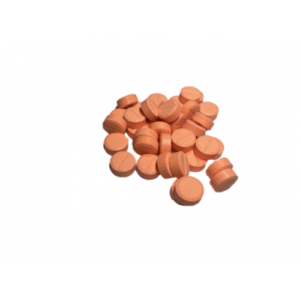
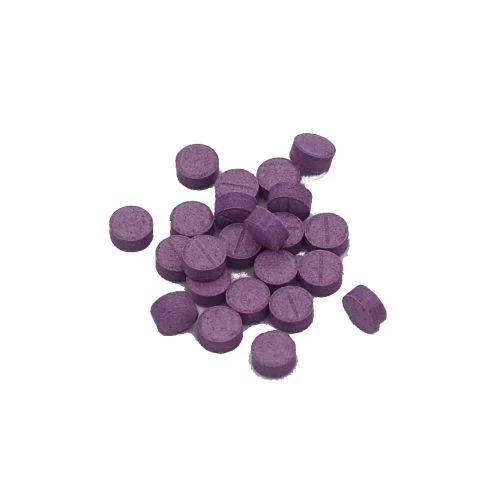
- Physical State: Micro pellets (compressed formulation)
- Stability: Moderate stability, requires cold storage
Analytical Characteristics:
- UV Absorption: 310 nm (indole chromophore, similar to LSD)
- Retention Time (HPLC): 13.8-14.6 minutes (C18 column, longer than LSD due to acyl group)
- Mass Spec m/z: 378.2 [M+H]+ (base peak), 324.2 [M+H-C₃H₄O]+ (LSD fragment), 280.2 [further fragmentation]
- NMR Signatures: Cyclopropyl protons (0.8-1.5 ppm), diethylamide signals (1.0-1.2 ppm, 3.2-3.5 ppm), indole/ergoline protons (6.8-7.4 ppm, 2.5-3.5 ppm)
Research Applications & Scientific Utility
Prodrug Pharmacology Research:
1cP-LSD serves as a critical tool compound for investigating:
- Metabolic conversion of N¹-acylated lysergamides to LSD
- Pharmacokinetic comparisons (1cP-LSD vs. LSD)
- Bioavailability and absorption studies
- Structure-metabolism relationships in lysergamides
- Comparison with 1P-LSD, ALD-52, and 1B-LSD
Microdosing Research:
The 10mcg pellet formulation enables studies of:
- Sub-perceptual serotonergic activation
- Neuroplasticity at minimal doses
- Cognitive enhancement claims
- Mood and creativity research
- Long-term microdosing protocols
- Comparison with placebo-controlled studies
Serotonin Receptor Pharmacology:
- 5-HT₂A receptor binding (after conversion to LSD)
- Partial agonist efficacy studies
- Receptor selectivity profiling
- Signaling bias and pathway studies
- Comparison with parent LSD compound
Comparative Psychedelic Research:
- Structure-activity relationships in lysergamides
- Head-to-head comparisons with LSD, psilocybin, DMT
- Duration and onset studies
- Subjective effects profiling
- Therapeutic potential assessment
Forensic & Analytical Chemistry:
- Novel lysergamide identification
- LC-MS/MS method development
- Metabolite identification studies
- Designer drug monitoring programs
- Reference standard for seized sample analysis
Formulation & Manufacturing
Micro Pellet Technology:
Biosynlab’s 1cP-LSD micro pellets utilize advanced formulation technology:
Composition:
- Active: 1cP-LSD (10mcg per pellet, ±5% uniformity)
- Excipients: Pharmaceutical-grade binders, fillers
- Coloring: Food-grade colorants (blue or pink for identification)
- Coating: Protective enteric coating (optional)
Quality Control:
- Content Uniformity: USP <905> compliance
- Dissolution Testing: USP <711> apparatus
- Weight Variation: Strict pellet weight control
- Microscopy: Pellet integrity and homogeneity
- Stability Testing: Accelerated and real-time
Manufacturing Process:
- Active Incorporation: Precise 1cP-LSD dosing
- Granulation: Uniform mixing and granule formation
- Compression: Micro pellet formation
- Coating: Protective coating application
- Packaging: Immediate sealing in protective containers
Synthesis & Quality Control Protocols
Biosynlab’s 1cP-LSD production adheres to rigorous analytical-grade standards:
Synthetic Route:
- Starting Material: LSD or lysergic acid (appropriately sourced)
- Acylation: Reaction with cyclopropionyl chloride or anhydride
- Purification: Flash chromatography and crystallization
- Formulation: Micro pellet manufacturing
- Packaging: Immediate protection from light and moisture
Analytical Verification:
- HPLC-PDA: Purity ≥99.0%, impurity profiling (LSD, iso-LSD, 1cP-iso-LSD) <0.5%
- ¹H NMR (400 MHz): Complete structural assignment, cyclopropyl confirmation
- ¹³C NMR (100 MHz): Carbon environment verification
- LC-MS/MS: Molecular weight confirmation, fragmentation pattern
- FTIR-ATR: Amide carbonyl (cyclopropionyl), indole confirmation
- Chiral HPLC: Verification of (6aR,9R)-configuration
- UV-Vis: Characteristic ergoline absorption
- Residual Solvent: GC-HS per ICH Q3C guidelines
- Heavy Metals: ICP-MS for Class 1 and 2 elements
- Uniformity of Dosage Units: USP <905>
Stability Considerations:
- Light sensitive: Amber packaging mandatory
- Temperature sensitive: Frozen storage recommended
- Moisture sensitive: Desiccant inclusion critical
- Hydrolysis risk: Can convert to LSD over time
Batch Documentation:
- Certificate of Analysis (COA) with complete analytical data
- Material Safety Data Sheet (MSDS) with handling protocols
- Stability testing data
- Chain of custody documentation
Packaging, Storage & Logistics
Primary Containment:
- Amber Type I borosilicate glass vials (25-250 pellet capacity)
- Blister packs with foil backing (individual pellet protection)
- PTFE-lined caps with desiccant inclusion
- Argon headspace to prevent oxidation
- Light-proof secondary aluminum foil wrapping
- Tamper-evident seals
Secondary Packaging:
- Rigid protective containers with custom foam inserts
- Temperature-controlled packaging with phase-change materials
- Plain unmarked cardboard exterior
- Discreet shipping labels
Storage Specifications:
- Recommended: -20°C freezer, desiccated, inert atmosphere
- Short-term: 2-8°C refrigerator (<3 months)
- Ambient: Not recommended (>30 days)
- Stability: 12+ months at -20°C with proper handling
- Light Protection: Critical – complete darkness required
Handling Protocols:
- Fume hood recommended for bulk handling
- Amber lighting or darkroom conditions
- Nitrile gloves, safety goggles, lab coat required
- Inert atmosphere handling for bulk quantities
- Comprehensive inventory tracking
Global Distribution & Regional Availability
Biosynlab ships 1cP-LSD to research institutions:
United States:
Research institutions (legal gray area – for analytical purposes), forensic laboratories
United Kingdom:
Research chemical vendors (legal status unclear), licensed institutions
European Union:
Germany (NpSG – Neue Psychoaktive Substanzen Gesetz), Netherlands, research institutions
Other Regions:
Canada (Schedule III), Australia (Schedule 9), varies by jurisdiction
Shipping Specifications: