What separates a research chemical from a pharmaceutical tablet? The answer involves much more than compressing powder into a solid shape. Chemical identity, formulation design, manufacturing controls, analytical testing, and regulatory authorization all contribute to the quality of an approved medicine.
Thank you for reading this post, don't forget to subscribe!includes chemical powders, tablets, and botanical capsules. These formats provide useful examples for understanding material characterization and pharmaceutical development. This guide examines selected listings, explains molecular formulas, and introduces the principles behind industrial tablet manufacturing without presenting research products as approved treatments.
Research Chemicals Versus Pharmaceutical Ingredients
A research chemical is a material supplied for investigation rather than automatically authorized for medical use. An active pharmaceutical ingredient, or API, must meet the specifications and regulatory requirements applicable to its intended medicinal product.
A supplier’s product description, purity percentage, or tablet format does not establish that status. Researchers should distinguish chemical identity from clinical safety, therapeutic effectiveness, manufacturing qualification, and legal authorization. Likewise, a research material is not necessarily a certified reference material: that designation requires appropriate characterization, traceability, and supporting documentation.
Selected BioSynLab Products and Their Research Context
Noopept Tablets: A Finished Solid Format
The BioSynLab Noopept Tablets listing describes tablets labeled 10 mg, supplied in a 90-piece container for laboratory and analytical applications. Those figures describe the listed presentation, not a recommended dose.
A finished tablet raises questions beyond the identity of its named compound. What other ingredients are present? Is the labeled content consistent across individual units? Does the material remain stable during storage? Answers require batch documentation and suitable testing; appearance alone cannot demonstrate pharmaceutical quality.
Noopept Powder: Chemical Identity and Formula

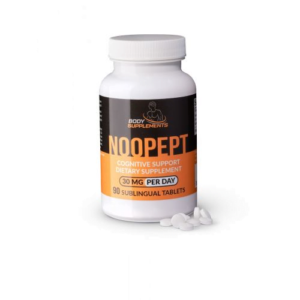
The catalog also includes Noopept Powder. Noopept, also known as omberacetam, has the molecular formula C17H22N2O4 and a molecular weight of approximately 318.37 g/mol. Its formula identifies the numbers of carbon, hydrogen, nitrogen, and oxygen atoms in the molecule.
A molecular formula is not a manufacturing recipe, purity certificate, or guarantee of biological performance. Analytical work must also address structure, stereochemistry where relevant, impurities, water content, and the characteristics of the supplied batch.
Ginkgo Biloba: A Botanical Mixture
The Ginkgo Biloba Vega Caps product page describes a botanical extract in capsule form. Ginkgo extracts contain multiple constituents, including flavonoid glycosides and terpene lactones, rather than one chemically uniform active substance.
Consequently, a botanical extract has no single molecular formula. Meaningful characterization involves botanical identity, constituent profiles, marker assays, and contaminant screening. Matching selected marker percentages does not establish equivalence to a proprietary pharmaceutical extract or prove comparable clinical effects.
Bacopa Monnieri: Why Standardization Matters
Bacopa Monnieri Capsules provide another botanical example. Bacopa materials contain complex mixtures, often characterized using bacoside-related markers. A stated capsule mass does not independently establish the quantities of individual constituents.
For botanical research, teams should review the plant identity, plant part, extraction information, marker specification, analytical method, and batch results. These details improve comparability between samples without implying that different commercial extracts are interchangeable.
Understanding a Pharmaceutical Tablet Formula
A tablet formulation describes the complete composition of a dosage form, not merely the molecular formula of its active ingredient. Besides an authorized API, a formulation commonly includes excipients selected for specific functions.
Fillers provide bulk and support practical tablet dimensions.
Binders help particles form a mechanically coherent tablet.
Disintegrants support tablet breakup under specified conditions.
Lubricants reduce friction during processing and tablet ejection.
Glidants improve powder handling and flow where needed.
Coating materials may support protection, appearance, or release characteristics.
Microcrystalline cellulose, mannitol, povidone, crospovidone, and magnesium stearate are familiar examples in pharmaceutical development. Their suitability depends on grade, compatibility, intended function, and the finished product’s requirements. No universal ingredient ratio works for every compound, and adding excipients cannot convert an unapproved research chemical into an authorized medicine.
Three Established Tablet Manufacturing Processes
Direct Compression
Direct compression forms tablets from a suitable powder blend without a preceding granulation stage. It can simplify production and avoid introducing granulation liquid. Success depends on appropriate flow, compressibility, and blend uniformity.
Differences in particle size or density can cause segregation. Development teams therefore evaluate material properties and processing behavior rather than assuming that a visually mixed powder is uniform.
Dry Granulation
Dry granulation uses mechanical densification to create granules before final tableting. It may improve handling when direct compression is unsuitable and can be useful for materials sensitive to moisture.
The resulting granules still require evaluation. Excessive densification or unsuitable material properties can impair subsequent compaction, making process selection a product-specific development decision.
Wet Granulation
Wet granulation uses a liquid and typically a binder to agglomerate particles, followed by appropriate drying and sizing. It can improve flow and reduce some segregation problems.
However, exposure to moisture, heat, or solvents may affect ingredient stability. The choice between direct compression, dry granulation, and wet granulation should follow scientific evaluation within qualified facilities, not a generic online recipe.
What Established Companies Contribute
Public technical guidance from Merck describes these principal tableting technologies and emphasizes excipient selection, powder properties, and formulation performance. BASF’s pharmaceutical materials similarly explain the roles of binders, disintegrants, lubricants, and coating systems.
The shared lesson is that reliable tablets result from a characterized formulation and a controlled process. These companies’ educational materials do not verify BioSynLab’s products, establish a commercial partnership, or demonstrate that any listed research material meets their manufacturing standards.
Quality Control From Incoming Material to Finished Product
Pharmaceutical quality begins with supplier qualification and incoming material assessment. Identity testing, appropriate impurity controls, traceable batch records, and documented storage conditions support confidence in the starting material.
Depending on the product, finished-tablet evaluation includes assay, content uniformity, dissolution, disintegration, mechanical strength, and friability. Stability studies assess whether specifications remain satisfied throughout the proposed shelf life. Appropriate microbiological and contaminant controls may also be necessary.
HPLC, mass spectrometry, and other analytical techniques answer different questions. A reported chromatographic purity result does not automatically measure tablet content or establish freedom from every contaminant. Methods, specifications, and certificates should be reviewed together.
Packaging, Storage, and Traceability
Packaging is part of material control, not simply product presentation. Depending on the material, protection against moisture, light, oxygen, or contamination may be important. Storage instructions should reflect supporting stability data rather than assumptions based on another supplier’s product.
Laboratories should record receipt dates, batch identifiers, container condition, and any relevant transport concerns. Opening, sampling, and transferring material can change its exposure history, so those activities also deserve documentation.
A complete record connects each analytical result to the specific sample tested. This traceability helps investigate unexpected findings, compare batches, and determine whether additional assessment is needed. Sealed packaging alone cannot prove chemical identity, content uniformity, or suitability for pharmaceutical manufacture.
Responsible Product Review
When evaluating a BioSynLab listing, begin with the intended use and available batch documentation. Confirm the exact material, stated presentation, relevant safety information, and applicable legal restrictions. Avoid assuming pharmaceutical approval from words such as “premium,” “high purity,” or “research grade.”
Understanding chemical formulas, botanical standardization, excipient functions, and manufacturing choices helps researchers ask better questions. The essential distinction remains clear: laboratory materials support investigation, while approved medicines require a separate, rigorous development and authorization pathway. Research-only materials are not intended for human consumption.