
Description
Premium 2-METHYL-AP-237 HCl Pellets – 20mg: Industrial Grade Research Chemical for Advanced Scientific Studies
Thank you for reading this post, don't forget to subscribe!
Product Details Table
| Attribute | Specification |
|---|---|
| Brand | BioSynLab Research Compounds |
| Product Name | 2-Methyl-AP-237 HCl |
| IUPAC Name | 1-[2-(4-tert-butoxyphenyl)ethyl]-2-methyl-4-phenylpiperazine hydrochloride |
| Synonyms | 2-Me-AP-237, 2-Methyl-bucinnazine, 2-Methyl-1-butyryl-4-phenylpiperazine analog |
| CAS Number | Not assigned (novel research compound) |
| Molecular Formula | C₂₃H₃₂N₂O · HCl |
| Molecular Weight | 388.98 g/mol (hydrochloride salt) |
| Salt Form | Hydrochloride (1:1 stoichiometry) |
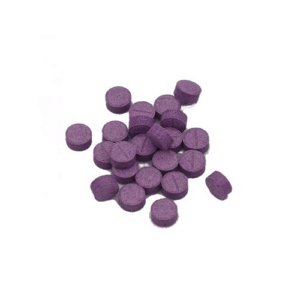
| Dosage Form | Compressed Pellets (Tablets) |
| Unit Dose | 20mg ± 0.5mg |
| Pellet Dimensions | 4mm diameter × 2mm height |
| Pellet Weight | 60mg total (20mg API + 40mg excipients) |
| Purity | ≥98.0% (HPLC Verified) |
| Appearance | White Round Pellets |
| Imprint | BioSynLab “2-AP” debossing |
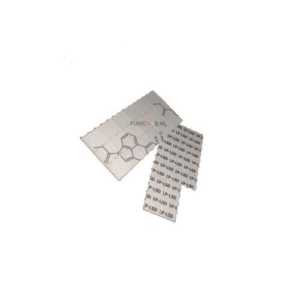
| Packaging | Blister packs (10 pellets per sheet) |
| Storage | 2-8°C, Desiccated, Light Protected |
| Excipients | Microcrystalline cellulose, Pregelatinized starch, Magnesium stearate |
| Documentation | COA, HPLC, NMR, HRMS, MSDS, Stability Data |
| Shipping | Temperature-Controlled, Discrete |
| Origin | EU/GMP Certified Manufacturing |
2-Methyl-AP-237 HCl Pellets 20mg | Novel Opioid Research Compound | BioSynLab
BioSynLab presents 2-methyl-AP-237 hydrochloride in 20mg precision-dosed pellets for advanced pharmacological research and opioid receptor investigations. As a methylated derivative of AP-237 (bucinnazine), this piperazine-based opioid analog offers unique structure-activity relationship insights for researchers studying μ-opioid receptor (MOR) pharmacology, analgesic compound development, and novel psychoactive substance (NPS) analytical characterization.
Chemical Architecture & Structural Modifications
2-Methyl-AP-237 hydrochloride represents a structural analog of the piperazine opioid AP-237, incorporating a methyl substituent at the 2-position of the piperazine ring:
Core Scaffold Features:
- Piperazine Heterocycle: Six-membered ring containing two nitrogen atoms (1,4-diazacyclohexane) serving as the pharmacophore backbone
- 2-Methyl Substitution: Additional methyl group at position 2 of the piperazine ring, creating steric modification of the binding pocket interaction
- 4-Phenyl Substitution: Aromatic ring at position 4 contributing to lipophilicity and receptor affinity
- 1-(4-tert-butoxyphenethyl) Side Chain: Ether-linked aromatic system providing μ-opioid receptor selectivity
Physicochemical Properties:
- Molecular weight: 388.98 g/mol (HCl salt)
- Calculated LogP: 4.2 (highly lipophilic)
- pKa (piperazine N): ~8.5-9.0 (protonated at physiological pH)
- Melting point: 198-205°C (decomposition, HCl salt)
- Chirality: Racemic mixture (2-methyl creates stereocenter)
Structural Relationship to AP-237:
AP-237 (bucinnazine, 1-butyryl-4-cinnamylpiperazine) is a clinically utilized analgesic in certain jurisdictions. 2-Methyl-AP-237 represents a designer modification with potentially altered pharmacokinetics and receptor binding characteristics.
Pellet Formulation & Pharmaceutical Engineering
Our 20mg 2-methyl-AP-237 HCl pellets utilize direct compression technology:
Formulation Composition:
- Active Pharmaceutical Ingredient: 2-Methyl-AP-237 HCl – 20.0mg (33.3% w/w)
- Diluent: Microcrystalline cellulose (Avicel PH-102) – 30.0mg (50.0% w/w)
- Binder: Pregelatinized starch (Starch 1500) – 8.0mg (13.3% w/w)
- Lubricant: Magnesium stearate – 2.0mg (3.3% w/w)
Physical Specifications:
- Hardness: 4-6 kp (optimal for handling)
- Friability: <0.5% (minimal dust generation)
- Disintegration: 25-40 minutes (simulated gastric fluid)
- Dissolution: >80% API release within 45 minutes
- Weight uniformity: RSD <5% (n=20)
Pellet Advantages:
- Precise unit dosing eliminates weighing variability
- Improved stability vs. powder (reduced surface area)
- Enhanced handling characteristics for laboratory manipulation
- Compatible with dissolution studies and pharmaceutical research
Blister Packaging & Stability Preservation
2-Methyl-AP-237 HCl pellets are sealed in pharmaceutical-grade aluminum blisters:
Barrier Properties:
- Cold-form aluminum (CFF) construction
- Water vapor transmission: <0.01 g/m²/day
- Oxygen exclusion: <0.1 cc/m²/day
- Light blocking: >99% (UV-Vis spectrum)
Secondary Packaging:
- Tamper-evident cartons with holographic seals
- Indicating desiccant (non-contact compartment)
- Batch-coded labeling with QR-linked COA
- Temperature indicators
Stability Profile:
- Long-term: 24 months at 2-8°C (refrigerated)
- Accelerated: 6 months at 40°C/75% RH
- In-use: 30 days at room temperature once opened
Analytical Characterization & Novel Compound Verification
As a novel research chemical, BioSynLab 2-methyl-AP-237 undergoes extensive characterization:
High-Resolution Mass Spectrometry (HRMS):
- Expected [M+H]⁺: m/z 353.2587 (C₂₃H₃₃N₂O⁺, freebase)
- Mass accuracy: <5 ppm from theoretical
- Fragmentation pattern: Characteristic piperazine ring fragments
Nuclear Magnetic Resonance (NMR):
- ¹H NMR (600MHz, DMSO-d₆):
- Aromatic protons: δ 6.8-7.4 (m, 9H)
- Piperazine CH₂: δ 2.5-3.2 (m, 8H)
- 2-Methyl CH₃: δ 1.15 (d, 3H, J=6.5Hz)
- tert-butyl CH₃: δ 1.28 (s, 9H)
- Side chain CH₂: δ 2.6-2.9 (m, 4H)
- ¹³C NMR (150MHz): 23 distinct carbon signals
- 2D NMR (COSY, HSQC, HMBC): Complete structural assignment
Chromatographic Analysis:
- HPLC-UV (254nm): ≥98.0% purity
- Related substances: <2.0% total impurities
- Residual solvents: Meets ICH Q3C
- Chiral HPLC: Enantiomeric ratio (racemic mixture)
Spectroscopic Confirmation:
- FTIR: N-H stretch (3400 cm⁻¹), aromatic C-H (3050 cm⁻¹), C-O-C ether (1080 cm⁻¹)
- UV-Vis: λmax 254nm (aromatic chromophores)
- XRPD: Crystalline form identification
Research Applications & Scientific Rationale
2-Methyl-AP-237 HCl serves as a valuable research tool for:
Opioid Pharmacology:
- μ-opioid receptor (MOR) binding affinity determination
- Structure-activity relationships (2-methyl effect on potency)
- Receptor selectivity (MOR vs. DOR vs. KOR)
- Functional assays (G-protein coupling, β-arrestin recruitment)
- Comparison with AP-237 (parent compound)
Analgesic Research:
- Thermal nociception assays (rodent tail-flick, hot plate)
- Mechanical allodynia models (neuropathic pain)
- Inflammatory pain models (formalin test)
- Tolerance development studies
Pharmacokinetic Investigations:
- Metabolic stability (hepatocyte incubations)
- CYP450 metabolism (substrate identification)
- Plasma protein binding (equilibrium dialysis)
- Blood-brain barrier penetration (LogP correlation)
Forensic & Analytical Chemistry:
- NPS detection method development (LC-MS/MS, GC-MS)
- Retention time database construction
- Isomeric differentiation from AP-237 and positional isomers
- Stability in biological matrices
Toxicological Research:
- Respiratory depression modeling (in-vitro, in-vivo)
- Structure-toxicity relationships (opioid analog series)
- Drug-drug interaction potential (CYP inhibition)
Global Distribution & Discrete Procurement
BioSynLab provides secure distribution for opioid research compounds:
Packaging Specifications:
- Primary: Amber Type I borosilicate glass
- Closure: PTFE-faced silicone septa
- Secondary: Argon-flushed aluminized barrier pouch
- Tertiary: Discrete unmarked shipping containers
Shipping Options:
- Standard: 2-8°C with gel packs, 5-7 days
- Express: Temperature-monitored, 2-3 days
- Cryogenic: -20°C for bulk orders
- Discrete: No chemical nomenclature, generic return addresses
Service Coverage:
United Kingdom: London, Manchester, Birmingham, Leeds, Glasgow, Liverpool, Sheffield, Bristol, Edinburgh, Cardiff, Belfast, Nottingham, Leicester.
European Union: Berlin, Hamburg, Munich, Cologne, Frankfurt, Amsterdam, Rotterdam, Paris, Lyon, Barcelona, Madrid, Rome, Milan, Vienna, Brussels, Prague, Warsaw.
North America: New York, Los Angeles, Chicago, Houston, Philadelphia, San Antonio, San Diego, Dallas, San Jose, Austin, Toronto, Vancouver.