Description
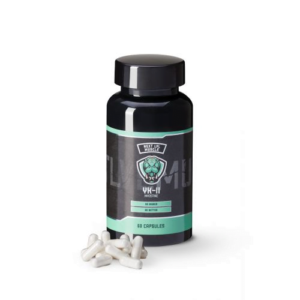
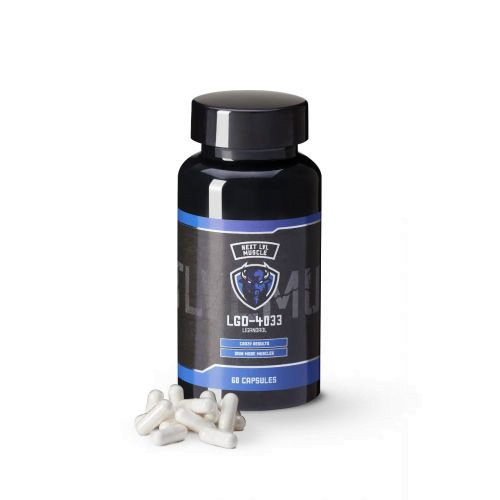
LGD-4033 (Ligandrol) Capsules: Premium Industrial Grade Chemical Supply
Thank you for reading this post, don't forget to subscribe!
Product Details Table
| Attribute | Specification |
|---|---|
| Brand | BioSynLab Research Compounds |
| Product Name | LGD-4033 (Ligandrol) |
| Synonyms | Ligandrol, VK5211, Anabolicum |
| CAS Number | 1165910-22-4 |
| Molecular Formula | C₁₄H₁₂F₆N₂O |
| Molecular Weight | 338.25 g/mol |
| Chemical Class | Selective Androgen Receptor Modulator (SARM) |
| Purity | ≥99.0% (HPLC Verified) |
| Dosage Form | Hard Gelatin Capsules |
| Unit Dose | 5mg, 10mg, or 15mg (custom available) |
| Capsule Size | Size 3 (5mg), Size 1 (10mg), Size 0 (15mg) |
| Capsule Color | White opaque (5mg), Gray/White (10mg), Gray (15mg) |
| Fill Weight | 120-250mg (API + excipients) |
| Excipients | Microcrystalline cellulose, Magnesium stearate, Silicon dioxide |
| Packaging | HDPE bottles (30, 60, 90 count) or blister packs |
| Storage | 2-25°C, Desiccated, Light Protected |
| Shelf Life | 24 months (sealed container) |
| Documentation | COA, HPLC, NMR, MS, MSDS, Stability Data |
| Shipping | Ambient Temperature, Discrete |
| Origin | EU/GMP Certified Laboratory |
LGD-4033 (Ligandrol) Capsules | High-Potency Selective Androgen Receptor Modulator | BioSynLab
BioSynLab presents pharmaceutical-grade LGD-4033 (Ligandrol) in precision-dosed capsule formulation for advanced androgen receptor research and high-potency anabolic studies. Recognized as one of the most potent non-steroidal SARMs in preclinical literature, Ligandrol serves as a critical research tool for investigating androgen receptor super-agonism, maximum anabolic/androgenic separation, and therapeutic applications in severe muscle wasting conditions and hormone replacement research.
Chemical Architecture & Superior Potency
LGD-4033 (Ligandrol, VK5211) is a non-steroidal selective androgen receptor modulator featuring a unique quinoline-based scaffold that confers exceptional receptor affinity:
Structural Features:
- Quinoline Core: Fused bicyclic aromatic system providing planar conformation for optimal AR binding
- Trifluoromethyl Groups: Dual CF₃ substituents enhancing metabolic stability and lipophilicity
- Pyrrolidine Ring: Five-membered nitrogen heterocycle contributing to binding specificity
- Amide Linkage: Critical pharmacophore for hydrogen bonding with AR ligand-binding domain
Mechanism of Action:
- High-Affinity AR Agonist: Ki ~1 nM (highest affinity among commercial SARMs)
- Tissue Selectivity: Anabolic effects in muscle and bone with minimal androgenic activity in prostate and seminal vesicles
- Superior Potency: Significantly more potent than MK-2866 (Ostarine) and other first-generation SARMs
- Oral Bioavailability: Excellent systemic exposure with single daily dosing
Physicochemical Properties:
- Molecular weight: 338.25 g/mol (lower than MK-2866, enabling higher potency)
- Calculated LogP: 3.6 (optimal lipophilicity for tissue penetration)
- pKa: Non-ionizable (neutral molecule at physiological pH)
- Melting point: 105-110°C (crystalline solid)
- Chirality: Single enantiomer (chiral center at pyrrolidine)
Capsule Formulation & Pharmaceutical Engineering
Our LGD-4033 capsules utilize precision formulation technology optimized for high-potency delivery:
Excipient Composition:
- Active Pharmaceutical Ingredient: LGD-4033 – 5mg, 10mg, or 15mg
- Diluent: Microcrystalline cellulose (Avicel PH-102) – 80-200mg
- Glidant: Silicon dioxide (Aerosil) – 1-3mg
- Lubricant: Magnesium stearate – 1-2mg
Capsule Specifications:
| Strength | Capsule Size | Fill Weight | Color Code |
|---|---|---|---|
| 5mg | Size 3 | ~120mg | White opaque |
| 10mg | Size 1 | ~180mg | Gray/White |
| 15mg | Size 0 | ~230mg | Gray |
Quality Attributes:
- Content uniformity: RSD <5% (tight specifications for high potency)
- Weight variation: Meets USP <905> criteria
- Disintegration: <25 minutes (USP <701>)
- Dissolution: >85% in 30 minutes (rapid release profile)
Packaging Options:
- HDPE bottles: 30, 60, 90 count with desiccant canister and cotton filler
- Blister packs: 10 capsules per sheet, child-resistant, unit-dose
- Bulk packaging: 500, 1000 count for institutional research programs
Analytical Characterization & Quality Verification
Each BioSynLab LGD-4033 batch undergoes comprehensive analytical profiling:
Chromatographic Analysis:
- HPLC-UV (220nm): ≥99.0% purity by area normalization
- Chiral HPLC: Enantiomeric purity >99% ee (single enantiomer)
- Related substances: <1.0% total impurities, <0.3% single impurity
- Residual solvents: Meets ICH Q3C (methanol, ethanol, acetonitrile, hexane, toluene)
Mass Spectrometry:
- LC-MS/MS: [M+H]⁺ at m/z 339.1, characteristic fragmentation pattern
- High-Resolution MS: Exact mass confirmation <3 ppm deviation (C₁₄H₁₃F₆N₂O⁺: 339.0967)
Nuclear Magnetic Resonance (NMR):
- ¹H NMR (600MHz, DMSO-d₆):
- Quinoline aromatic: δ 7.2-8.4 (m, 6H)
- Pyrrolidine CH: δ 4.85 (m, 1H)
- Pyrrolidine CH₂: δ 2.1-2.6 (m, 4H)
- Amide NH: δ 8.72 (br s, 1H)
- ¹⁹F NMR: Two distinct signals at δ -62.1 and -63.8 ppm (non-equivalent CF₃ groups)
- ¹³C NMR (150MHz): 14 distinct carbon signals (symmetry-reduced)
- FTIR: Amide N-H (3300 cm⁻¹), C=O (1680 cm⁻¹), C-F (1120, 1160 cm⁻¹), aromatic (1600 cm⁻¹)
Physical Testing:
- Water content: <0.3% (Karl Fischer, coulometric)
- Heavy metals: <5 ppm (ICP-MS, industrial standard)
- Specific rotation: [α]²⁰D = +8° to +12° (c=1, methanol)
- Residue on ignition: <0.1%
Research Applications & Scientific Significance
LGD-4033 capsules serve critical functions in multiple research disciplines:
Androgen Receptor Pharmacology:
- Ultra-high affinity binding studies (sub-nanomolar Ki determination)
- Crystal structure investigations (AR LBD co-crystallization)
- Coactivator recruitment (SRC-1, GRIP1, p/CIP)
- Coregulator profiling (NCoR, SMRT interactions)
Musculoskeletal Research:
- Severe muscle atrophy models (cancer cachexia, COPD, HIV)
- Hip fracture recovery studies (elderly populations)
- Glucocorticoid-induced myopathy (steroid muscle wasting)
- Sarcopenia interventions (age-related muscle loss)
Bone Health Research:
- Osteoporosis models (ovariectomy, glucocorticoid-induced)
- Bone mineral density enhancement studies
- Fracture healing acceleration
- Osteoblast/osteoclast activity modulation
Comparative SARM Research:
- Potency comparisons (LGD-4033 vs. MK-2866 vs. RAD-140)
- Selectivity profiling (prostate vs. muscle activity ratios)
- Dose-response modeling (low-dose efficacy studies)
- Combination studies (SARM + other anabolics)
Metabolic Studies:
- Body recomposition analysis (muscle gain + fat loss)
- Insulin sensitivity (glucose disposal rate)
- Lipid metabolism (HDL/LDL effects)
- Energy homeostasis (basal metabolic rate)
Clinical Translation Research:
- Phase I/II modeling (dose escalation studies)
- Pharmacokinetic profiling (t½ ~24-36 hours, QD dosing)
- Safety pharmacology (hepatic, renal, cardiovascular)
- Therapeutic index determination
Global Distribution & Discrete Procurement
BioSynLab provides secure, compliant distribution:
Packaging Specifications:
- Primary: Hard gelatin capsules in HDPE bottles or blister packs
- Secondary: Tamper-evident seals, desiccant chambers, oxygen absorbers
- Tertiary: Discrete unmarked shipping containers, customs documentation
Shipping Options:
- Standard: Ambient temperature, 5-7 days
- Express: Tracked courier, 2-3 days (DHL, FedEx, UPS)
- Discrete: No product identifiers, generic return addresses, commercial invoices
Service Coverage:
United Kingdom: London, Manchester, Birmingham, Leeds, Glasgow, Liverpool, Sheffield, Bristol, Edinburgh, Cardiff, Belfast, Nottingham, Leicester, Coventry, Brighton.
European Union: Berlin, Hamburg, Munich, Cologne, Frankfurt, Amsterdam, Rotterdam, Paris, Lyon, Barcelona, Madrid, Rome, Milan, Vienna, Brussels, Prague, Warsaw, Budapest, Stockholm, Copenhagen, Oslo, Helsinki, Lisbon, Dublin, Zurich.
North America: New York, Los Angeles, Chicago, Houston, Philadelphia, San Antonio, San Diego, Dallas, San Jose, Austin, Jacksonville, Fort Worth, Columbus, Charlotte, San Francisco, Indianapolis, Seattle, Denver, Washington D.C., Boston, Toronto, Vancouver, Montreal.